
27 Beautiful Japandi Dining Room Design Ideas
In this blog post, we will share the best Japandi dining room ideas and some of our top tips to achieve this style in your space.
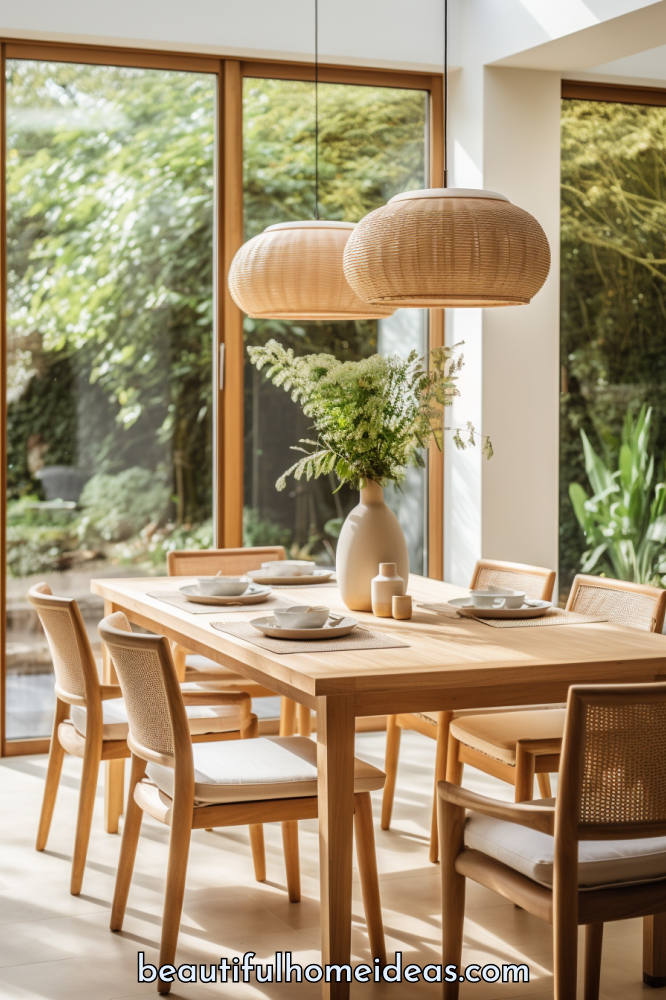
In recent years, Japandi dining room design ideas have become increasingly popular. Combining the minimalist beauty of Japanese design with the cozy functionality of Scandinavian decor, Japandi offers a serene, clutter-free environment perfect for dining spaces.

This fusion of styles creates a harmonious, calming space where simplicity and elegance meet.
Common Features of Japandi Dining Rooms

Japandi dining rooms are characterized by clean lines, neutral color palettes, and natural materials.

They focus on functionality and simplicity, avoiding clutter while still providing warmth and comfort. Light wood tones, muted colors, and a mix of textures are common elements that make Japandi spaces inviting and stylish.
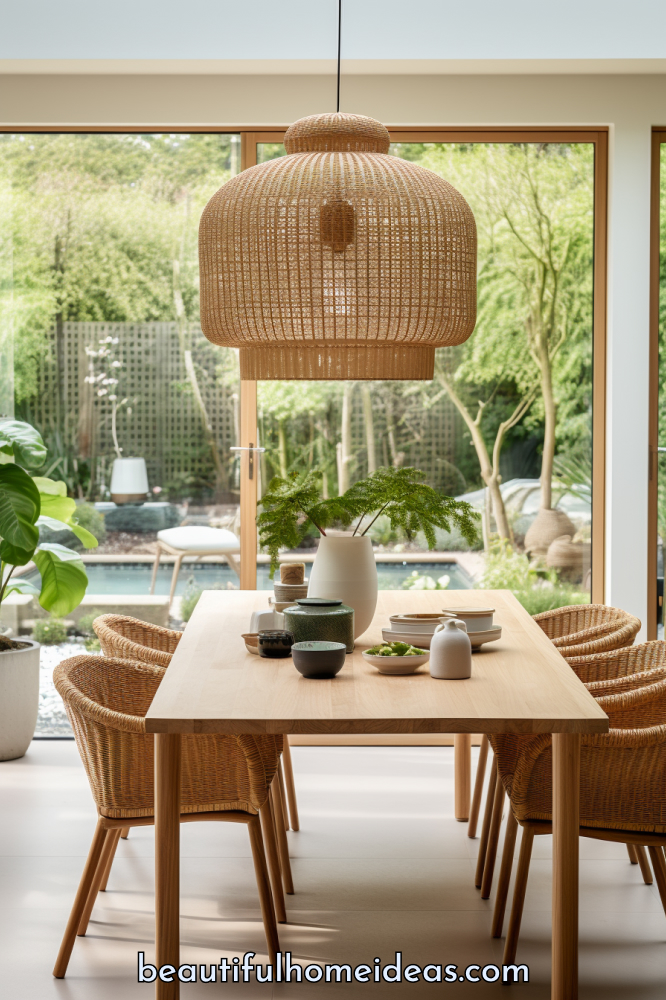
Let’s explore some tips on how to achieve this beautiful style in your own dining room.
Choose a Neutral Color Palette
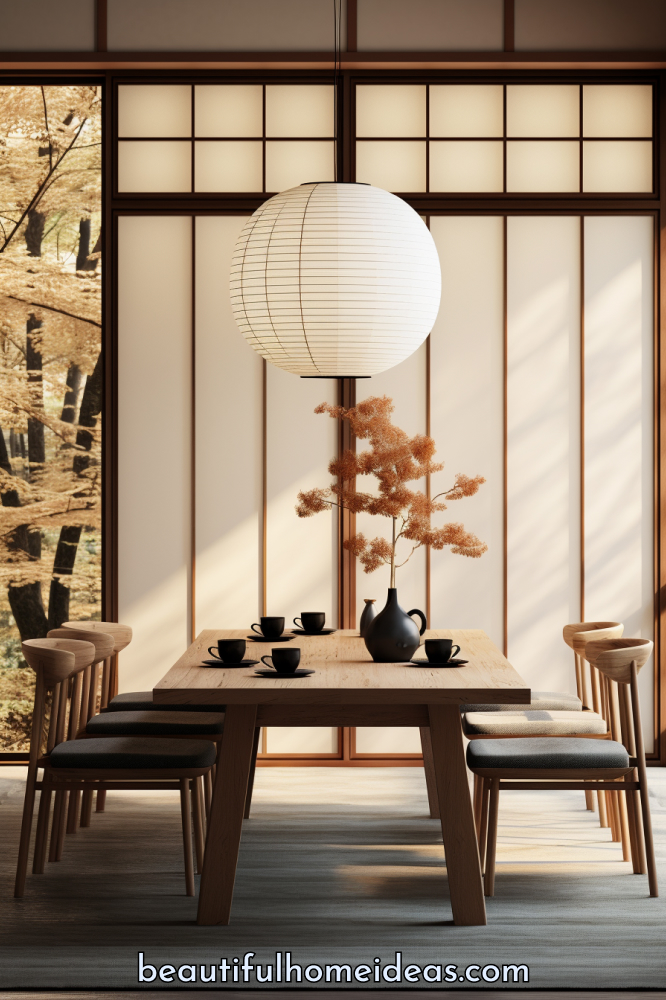
A neutral color palette is essential in Japandi dining room decor. Opt for shades of white, beige, gray, and light wood tones.
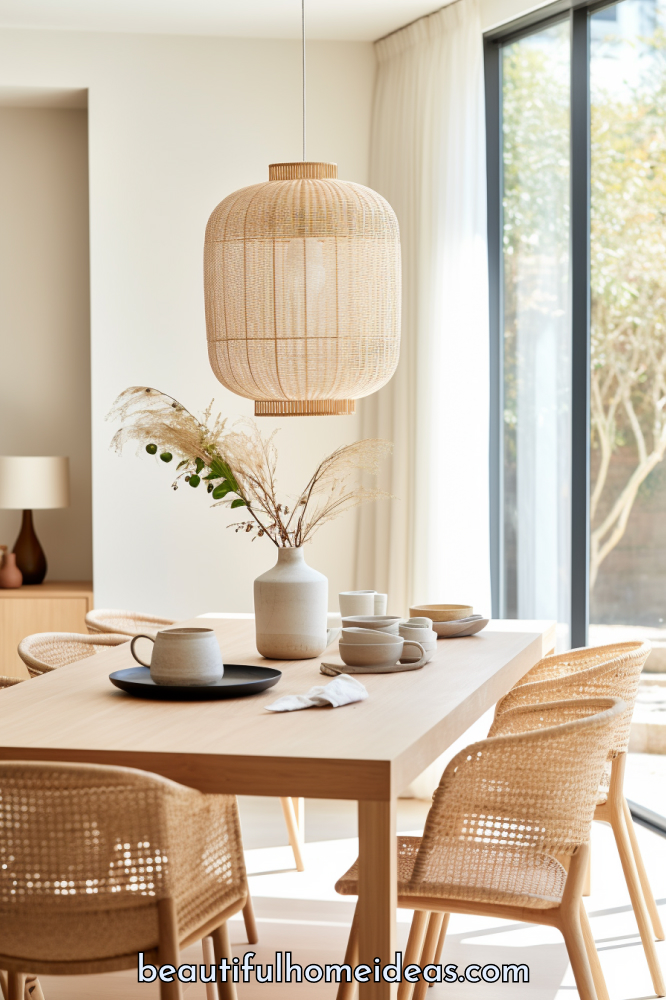
These colors create a calm and serene atmosphere, allowing the natural beauty of the materials to shine. You can introduce subtle pops of color through accessories like cushions, rugs, or wall art, but keep the overall look muted and harmonious.

To achieve this, start with neutral-colored walls and flooring.

Wooden furniture in light, natural finishes complements the look. Avoid overly bright or bold colors that can disrupt the tranquility of the space. Instead, choose soft, muted tones that enhance the natural light and make the room feel more open and airy.
Use Natural Materials

Natural materials are a cornerstone of Japandi dining room design ideas. Wood, bamboo, and stone bring warmth and texture to the space, creating a connection with nature.

Choose furniture made from light woods like oak or birch, and consider bamboo or rattan accents for a touch of Japanese influence.

In addition to furniture, think about incorporating natural materials in other elements of the room.
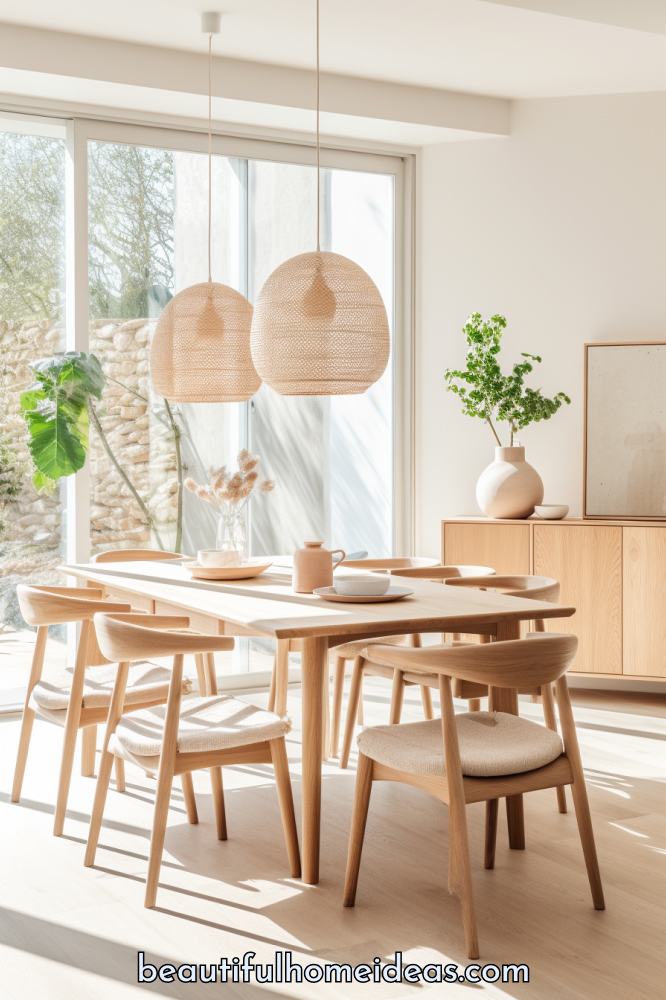
Stone countertops, ceramic dishware, and linen textiles add depth and interest while maintaining the minimalist aesthetic.
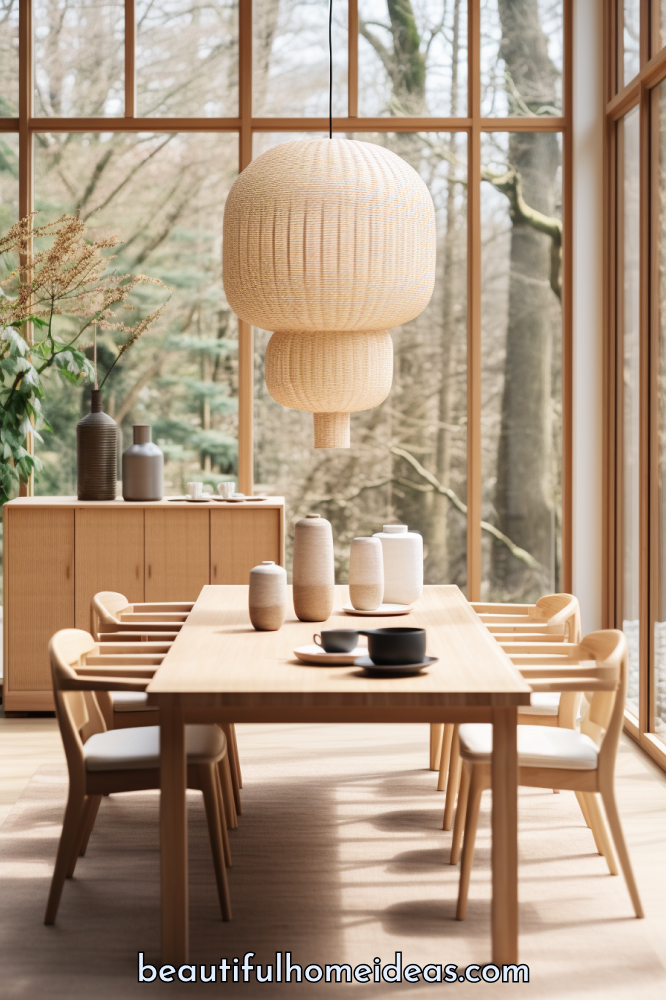
These materials not only look beautiful but also contribute to a sustainable and eco-friendly home.
Choose Minimalism
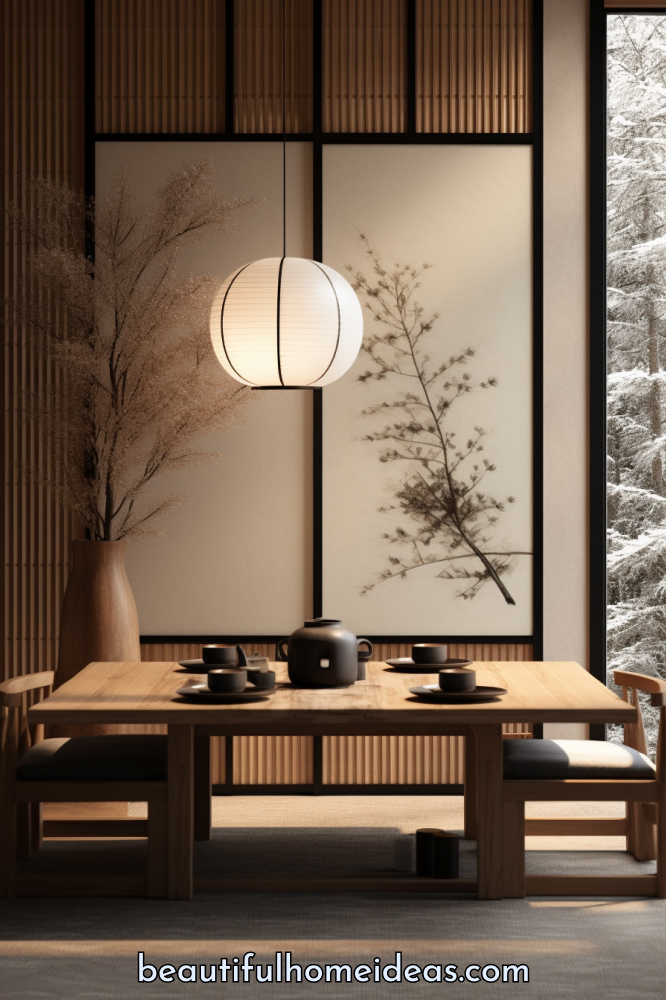
Japandi dining room decor is all about minimalism. Keep the space uncluttered and free of unnecessary items. Each piece of furniture and decor should have a purpose and contribute to the overall harmony of the room.

This doesn’t mean the space has to be sparse, but rather thoughtfully curated.

To embrace minimalism, focus on quality over quantity. Choose a few statement pieces that you love and that fit well within the space. Keep surfaces clear and avoid overcrowding the room with too many decorations.

This approach creates a sense of calm and allows the beauty of each element to stand out.
Functional Furniture

Functionality is key in Japandi design. Furniture should be practical and comfortable, with clean lines and a simple aesthetic.

Dining tables with extendable leaves, storage benches, and stackable chairs are great options that offer flexibility without compromising on style.
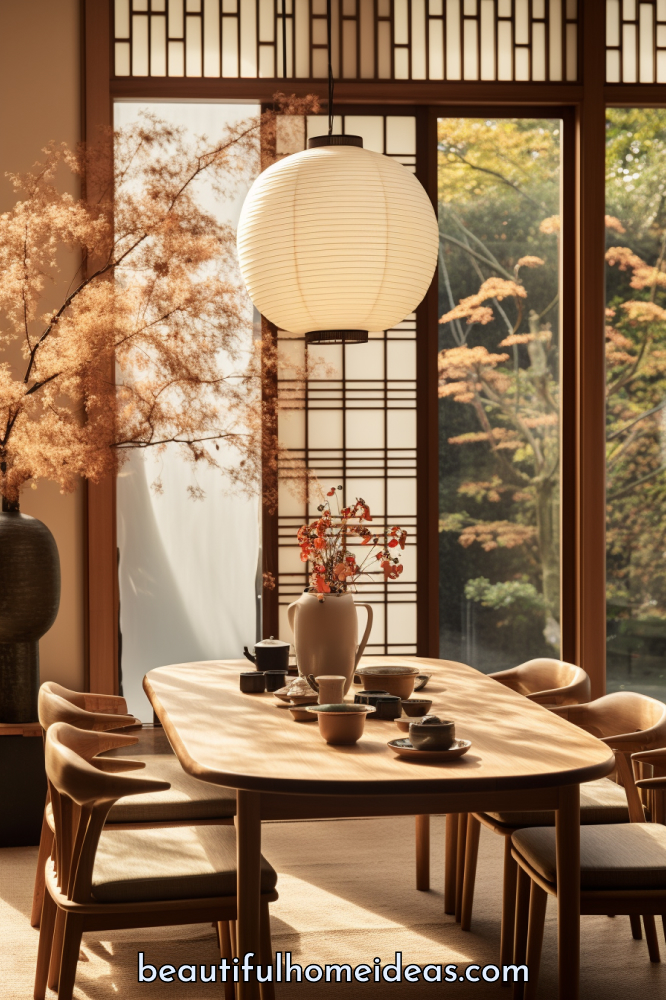
When selecting furniture, look for pieces that serve multiple purposes. For example, a dining table with built-in storage can help keep the space organized, while a bench with hidden compartments can provide extra seating and storage.
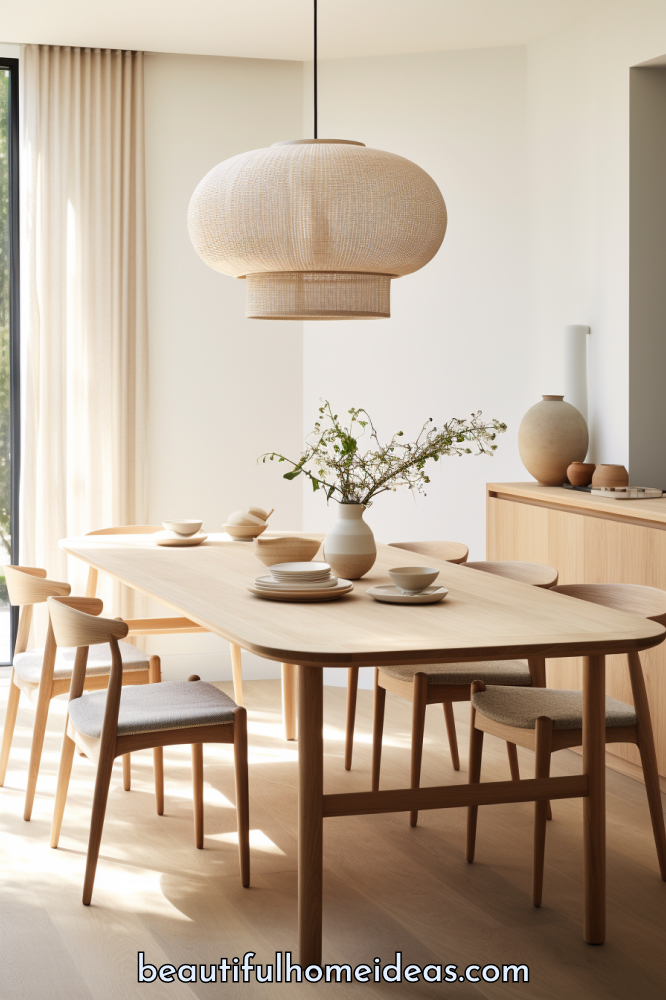
This focus on functionality ensures that the dining room remains both beautiful and practical.
Add Greenery
Plants play an important role in Japandi dining room decor. They bring a touch of nature indoors and enhance the sense of tranquility.
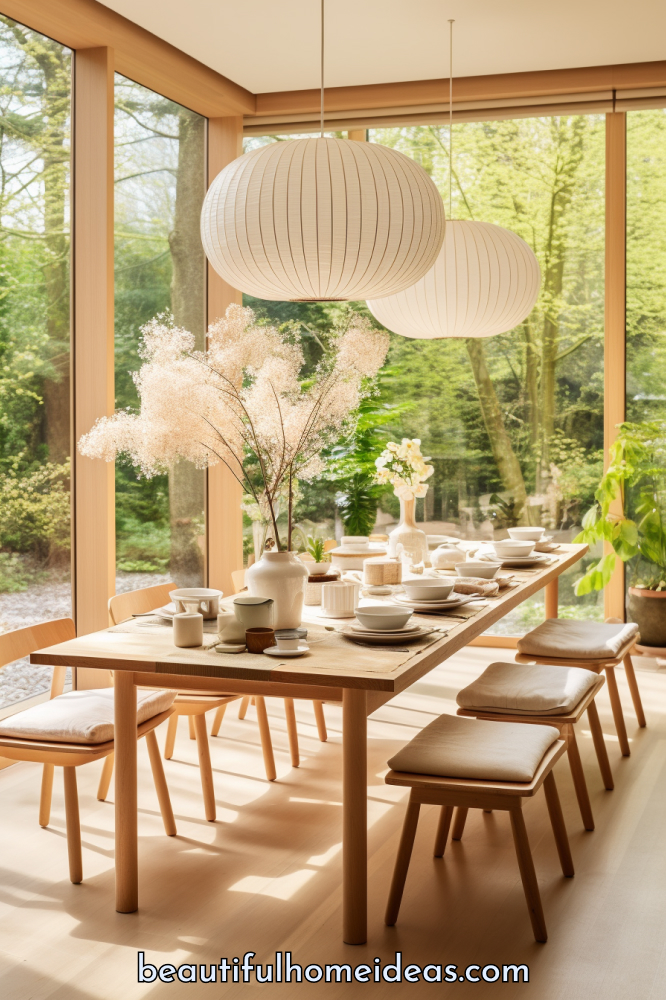
Choose simple, low-maintenance plants like succulents, ferns, or bonsai trees. These plants not only look beautiful but also improve air quality and create a calming atmosphere.
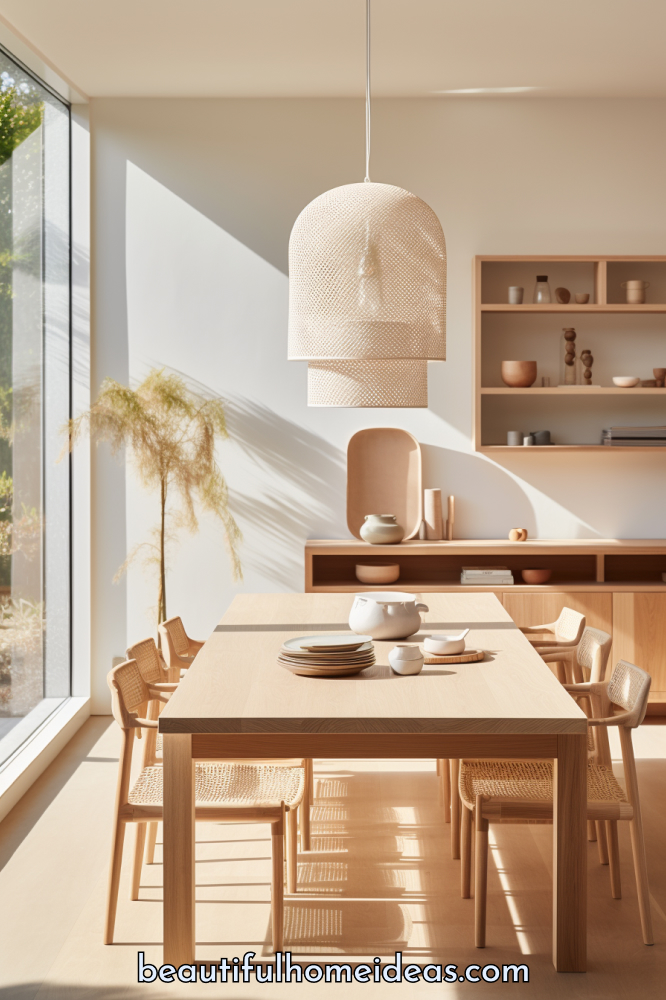
Place plants strategically around the dining room to add visual interest and break up the monotony of neutral colors. A large potted plant in a corner or a few small plants on the dining table can make a big impact. Use simple, understated pots that complement the overall decor.
Incorporate Japanese and Scandinavian Elements
To truly capture the Japandi aesthetic, be sure to honour both elements of the style by blending elements from both Japanese and Scandinavian design. For example, use Scandinavian-style furniture with Japanese-inspired accessories. A simple wooden dining table with clean lines can be paired with shoji screen room dividers or tatami mats for an authentic look.
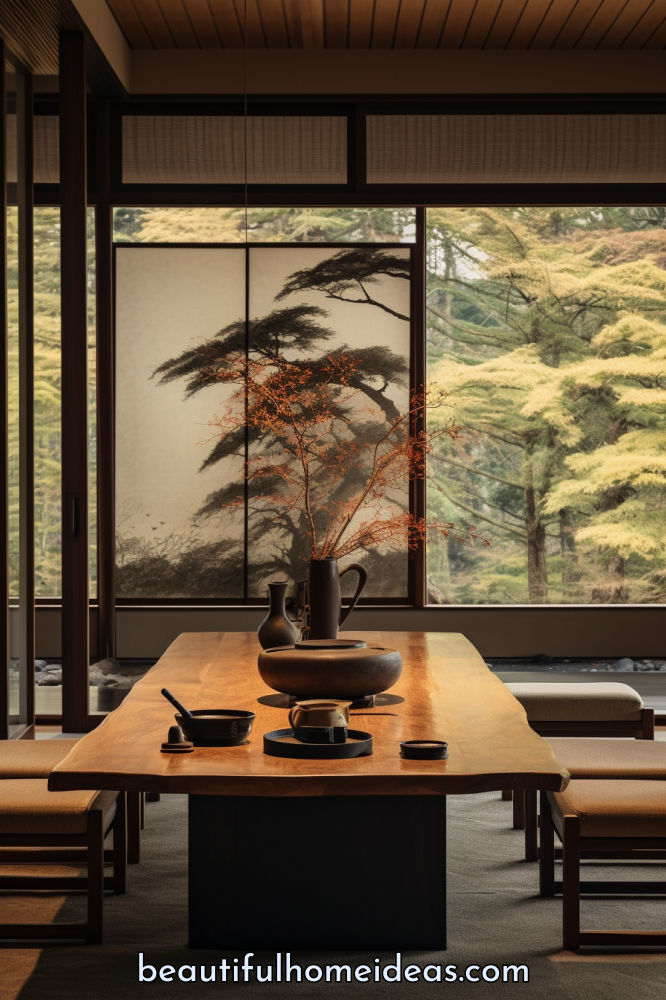
You can also mix and match decorative elements like ceramics, textiles, and lighting. Scandinavian pendant lights, combined with Japanese-style ceramic vases or bowls, create a balanced and cohesive aesthetic. This fusion of styles results in a unique and personalized dining space.
Get The Lighting Right
Lighting is crucial in Japandi dining rooms. Natural light is preferred, so maximize the amount of daylight by using sheer curtains or blinds.
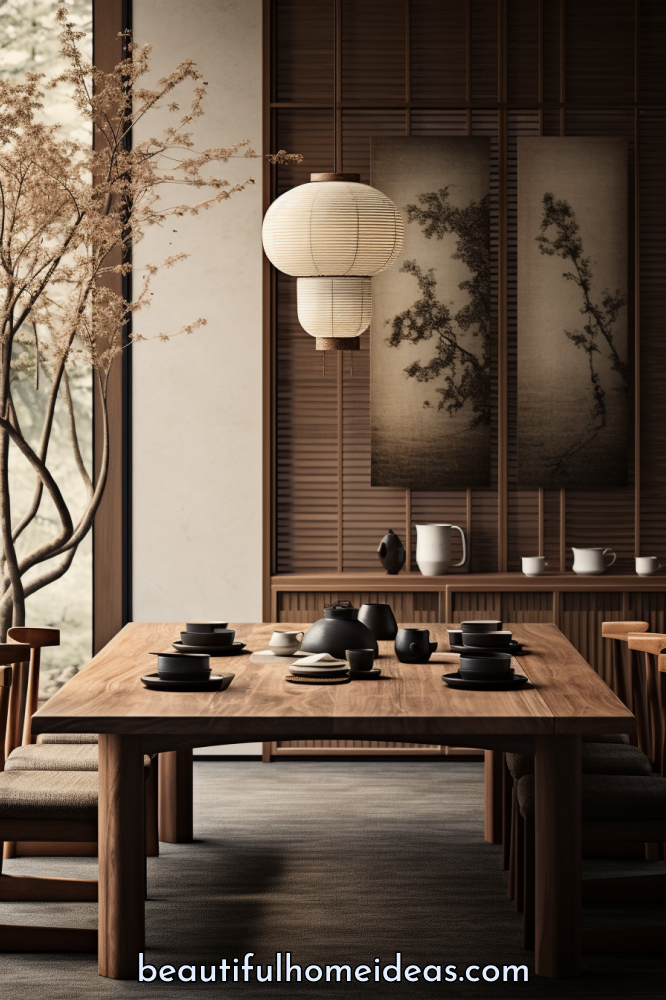
For artificial lighting, choose fixtures with clean lines and a minimalist design. Pendant lights, floor lamps, and wall sconces in neutral colors work well in this style.
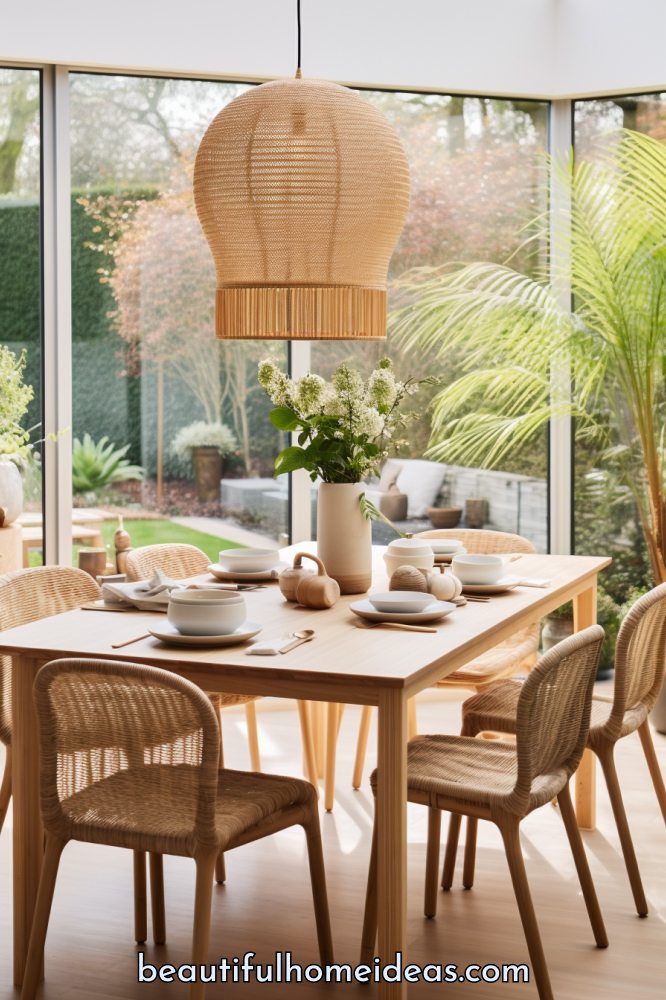
Consider the placement of your lighting to create a warm and inviting atmosphere. Use dimmable lights to adjust the brightness according to the time of day and the mood you want to create. Soft, warm light enhances the cozy and relaxing feel of a Japandi dining room.


