24 Amazing Living Room Gallery Wall Design Ideas
In this blog post, we share some of our favorite living room gallery wall ideas.

Creating a captivating gallery wall in your living room can transform your space into a something that completely reflects your unique style and taste.

Gallery walls have become popular in modern homes because they allow you to showcase art while adding depth and personality to any room.

Whether you’re displaying family photos, art prints, or a mix of both, a well-curated gallery wall can become the centerpiece of your home decor.
Why Choose A Gallery Wall?

Gallery walls are a favorite among homeowners and interior designers alike for quite a few reasons! First and foremost, you can curate a collection of artworks that resonate with you, creating a space that feels truly yours.

Plus, a gallery wall can significantly enhance the visual impact of your living room. By carefully selecting and arranging artworks, you can create a focal point that draws attention and adds character to your space.

Gallery walls are so, so versatile. They can adapt to any style or decor theme, whether you prefer a minimalist look or an eclectic mix of colors and textures.

This flexibility allows you to change and update pieces without much hassle. Finally, gallery walls make efficient use of vertical wall space, making your living room appear larger and more inviting.

Utilizing the wall space for a gallery wall frees up other areas for functional or decorative purposes, optimizing the room’s layout.
Choose a Cohesive Theme

When creating a gallery wall with your art, it’s essential to start with a cohesive theme or concept. For example, abstract art comes in various forms, from geometric shapes to fluid lines and bold colors. Choosing artworks that complement each other in terms of style and color palette helps to bring together the overall look.

This consistency makes sure that the gallery wall feels intentional and curated rather than random and chaotic.
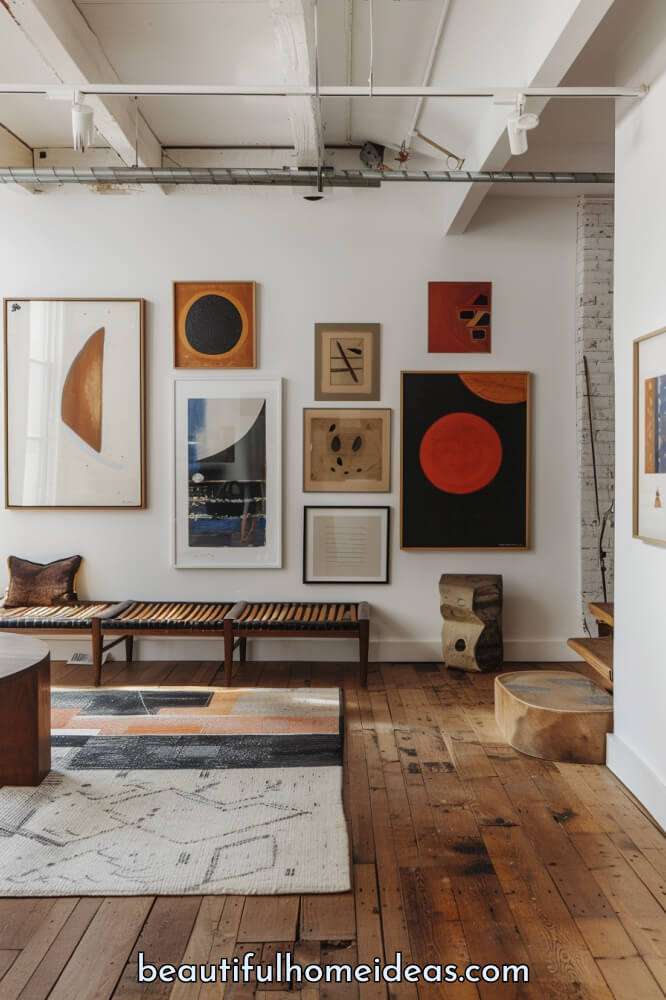
Abstract art often relies on visual harmony and balance, so consider how each piece interacts with the others. For example, if you choose a theme based on geometric shapes, ensure that the pieces share similar lines or patterns.

Alternatively, a color-focused theme, such as a monochromatic palette or complementary colors, can tie different artworks together seamlessly. This approach helps create a sense of cohesion and makes the gallery wall more visually appealing.
Mix Sizes and Shapes

Combine different sizes and shapes of artworks to add depth and texture to your gallery wall. Mixing larger statement pieces with smaller ones creates a dynamic arrangement that captures attention and adds visual interest.

This variation prevents the wall from looking flat or monotonous and allows each piece to stand out in its own right.

Consider the overall composition and how the different sizes and shapes interact. Place larger pieces strategically to anchor the arrangement and draw the eye, then fill in the gaps with smaller artworks. This layered approach adds dimension and ensures that the gallery wall feels balanced and visually engaging.
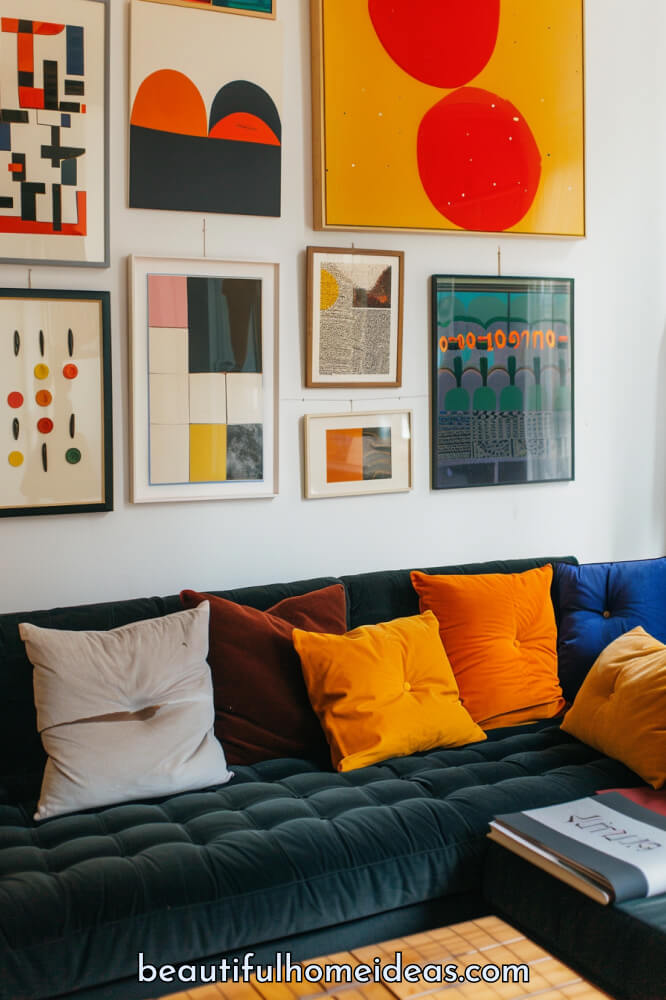
Remember, the goal is to create a cohesive yet varied display that showcases the beauty of each individual piece while contributing to the overall harmony of the wall.
Plan the Layout
Before hanging the artworks, lay them out on the floor to experiment with different arrangements. This planning stage is crucial for visualizing how the pieces will look together and ensuring the composition works well in the intended space.

Pay attention to the spacing between artworks and their alignment to achieve a balanced and aesthetically pleasing composition.

Consider creating a mock-up of your wall space with tape or using a digital tool to map out the layout. Start with a central piece to anchor the arrangement and build outward, balancing the visual weight across the gallery wall.

Ensure that the spacing between each artwork is consistent with the style you are going for in order to maintain a sense of order and cohesion. This careful planning will save you time and effort when it comes to the actual hanging process.
Use Consistent & Complementary Frames
Choose frames that complement the style of your artworks and each other. This may mean going for simple, modern frames in neutral tones, or antique frames to complement the artworks without overwhelming them.
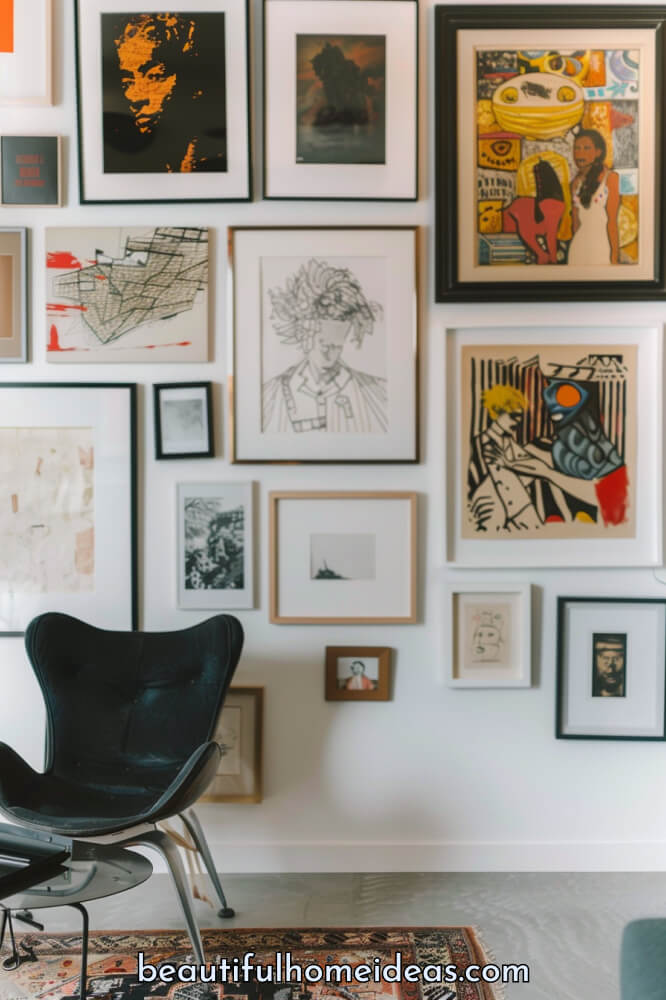
Consistent frames can help unify the look of your gallery wall, making it appear cohesive and well thought out.
If you prefer a more eclectic look, you can mix frame styles and colors, but try to keep some elements consistent, such as frame thickness or material. This approach can add variety without sacrificing overall harmony. The key is to ensure that the frames enhance the art rather than distract from it.

Create Visual Flow
Arrange artworks in a way that creates a visual flow across the wall. Start with a central piece and arrange the surrounding artworks in a way that leads the viewer’s eye naturally around the wall. This visual flow is essential for maintaining the viewer’s interest and ensuring the gallery wall feels dynamic and engaging.
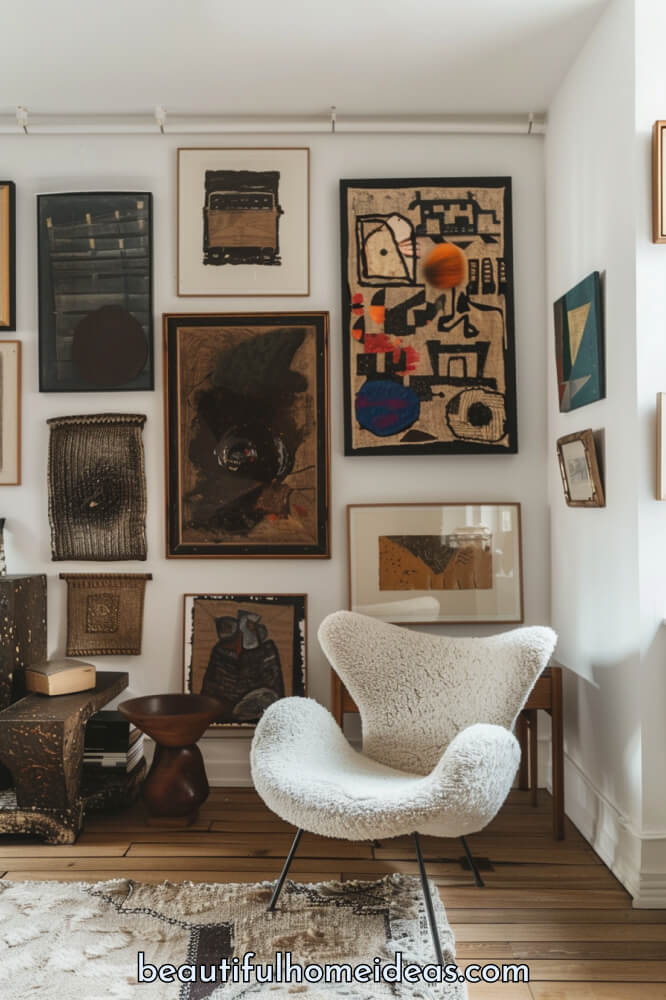
Consider how the shapes, colors, and lines in each artwork interact with one another. Place pieces with similar elements near each other to create a sense of continuity. Varying the orientation of the pieces can also add movement and guide the viewer’s eye throughout the gallery wall. This thoughtful arrangement will make your gallery wall a captivating focal point in your living room.
Balance and Symmetry

Achieve visual balance by distributing visual weight evenly across the gallery wall. While perfect symmetry can add a sense of order, don’t be afraid to introduce asymmetry to add interest and personality. The key is to ensure that no single area feels too heavy or crowded compared to the rest of the wall.

For example, if you have a large piece on one side, balance it with several smaller pieces on the opposite side. This distribution helps maintain balance and prevents the wall from feeling lopsided. Additionally, consider the colors and textures of the artworks, balancing bold or dark pieces with lighter or more subtle ones to achieve overall harmony.