
34 Beautiful Wabi-Sabi Dining Room Ideas To Inspire You
In this blog post, we share our favorite wabi-sabi dining room ideas.

We’ll also explore ideas to infuse your dining room with the timeless elegance of wabi-sabi decor.
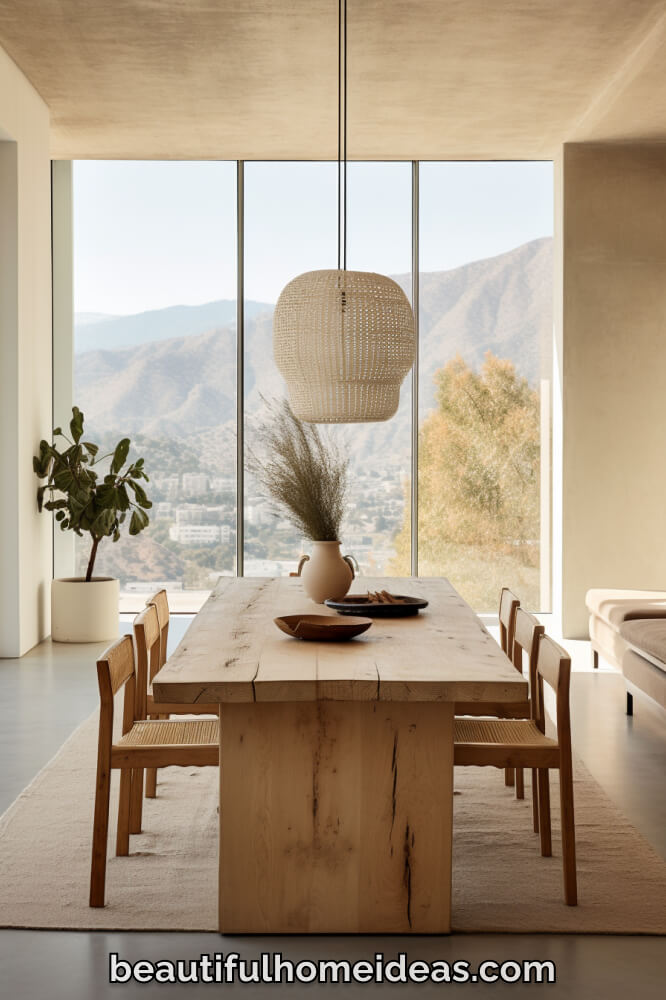
The concept of wabi-sabi, a traditional Japanese aesthetic, revolves around embracing imperfection and finding beauty in the simple, natural, and incomplete.

In the hustle of modern life, a wabi-sabi dining room offers a serene and calming space that reflects tranquility and authenticity.
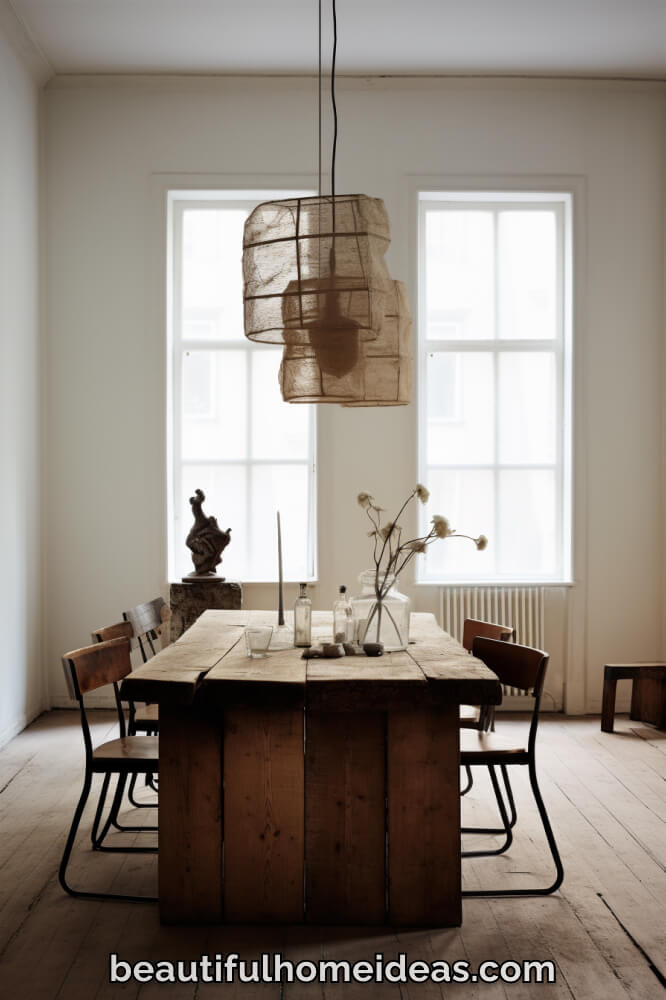
The Essence of Wabi-Sabi Dining Rooms
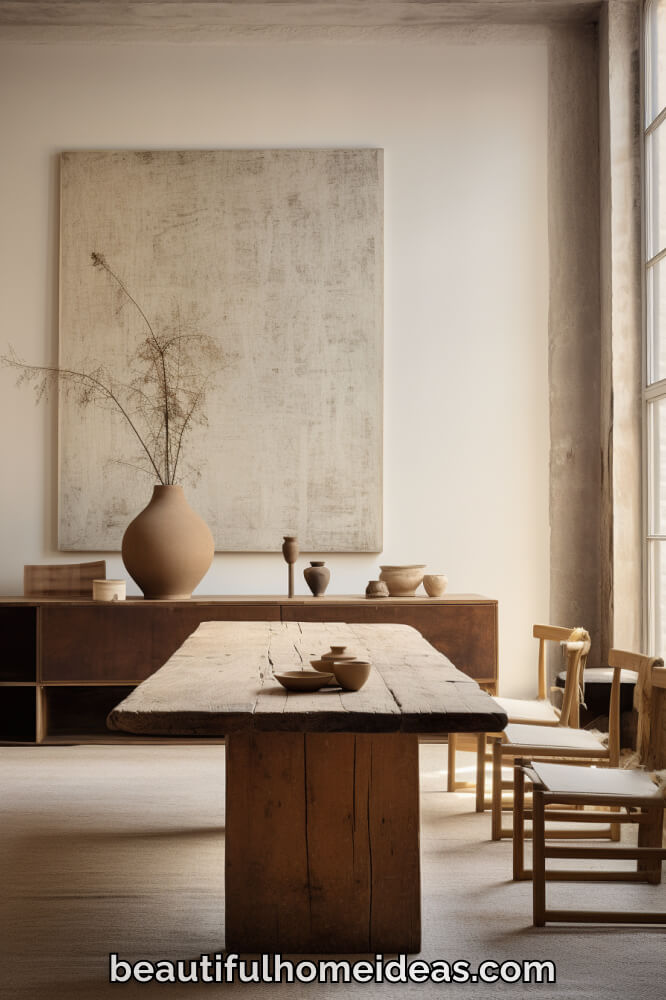
Wabi-sabi dining rooms are a celebration of the imperfect, the transient, and the incomplete. This aesthetic emphasizes natural materials, muted colors, and a sense of rustic simplicity.
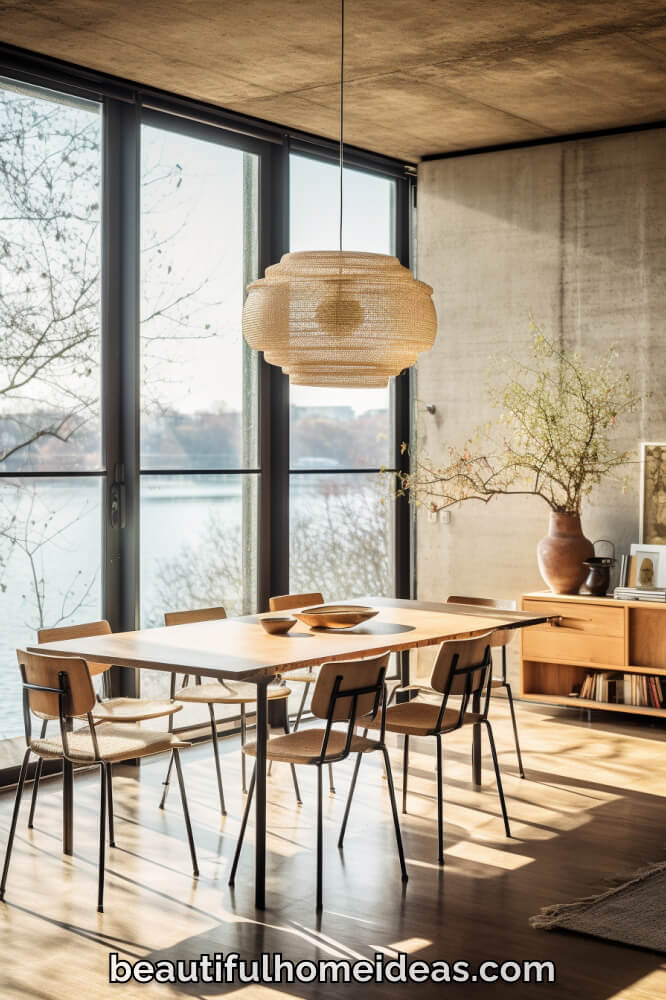
The goal is to create a space that feels lived-in and comfortable, where each element has a story and a sense of place.
Natural Materials and Textures

Incorporating natural materials is a cornerstone of wabi-sabi dining room ideas.

Think wood, stone, and clay. These materials bring a tactile quality to your space, adding warmth and a sense of grounding.

Wood: Use reclaimed wood for your dining table or chairs. The imperfections in the wood grain and the patina of age tell a story. Opt for unfinished or lightly finished wood to maintain its natural beauty.

Stone: Integrate stone elements, such as a stone centerpiece or a stone-topped dining table. The rough texture and cool feel of stone add an organic element that contrasts beautifully with the warmth of wood.
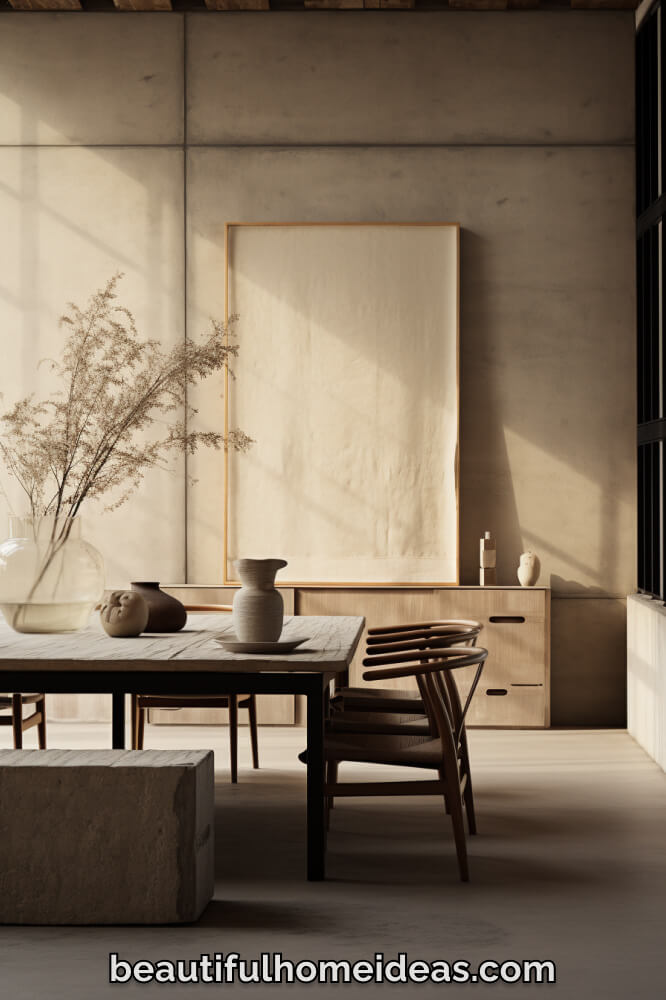
Clay: Handcrafted clay dishware adds an authentic touch. The slight variations and irregularities in each piece embody the wabi-sabi philosophy.

Embrace Imperfection and Patina

Wabi-sabi dining room decor thrives on imperfections.
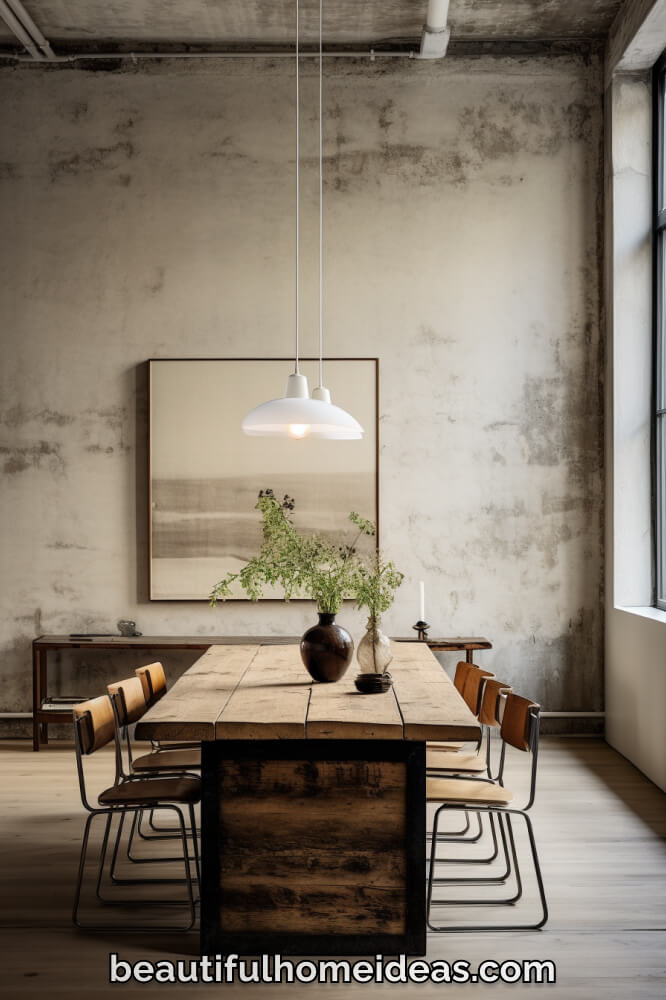
A scratch on the table, a chip in a ceramic bowl, or a faded rug all contribute to the charm. These elements add character and a sense of history to your dining room.

Distressed Furniture: Choose furniture with a distressed finish or pieces that show signs of wear. This could be a vintage dining table or antique chairs. The key is to embrace the imperfections rather than hide them.

Patina: Look for items that develop a patina over time. Brass candlesticks, copper pots, and leather chairs will age gracefully, adding depth and richness to your decor.

Muted Color Palette

A muted color palette is essential for creating a serene wabi-sabi dining room. Soft, earthy tones like beige, taupe, and gray dominate this aesthetic.

These colors create a calming backdrop that allows the natural materials and textures to stand out.

Wall Colors: Choose neutral tones for your walls. Soft grays, warm beiges, and off-whites are ideal. These colors create a tranquil environment and make the room feel more spacious.

Textiles: Incorporate textiles in natural fibers such as linen, cotton, and wool. Neutral-colored tablecloths, napkins, and seat cushions add to the overall aesthetic while providing comfort.

Simplicity and Functionality

Wabi-sabi design values simplicity and functionality. Each piece in your dining room should serve a purpose while contributing to the overall harmony of the space.

Minimalist Decor: Avoid clutter and opt for a minimalist approach. Select a few meaningful decor pieces rather than filling the room with unnecessary items. A single vase with dried flowers or a simple, handcrafted bowl can make a significant impact.

Functional Furniture: Choose furniture that is both beautiful and functional. A sturdy dining table, comfortable chairs, and practical storage solutions are essential. The key is to find a balance between aesthetics and usability.
Connection to Nature
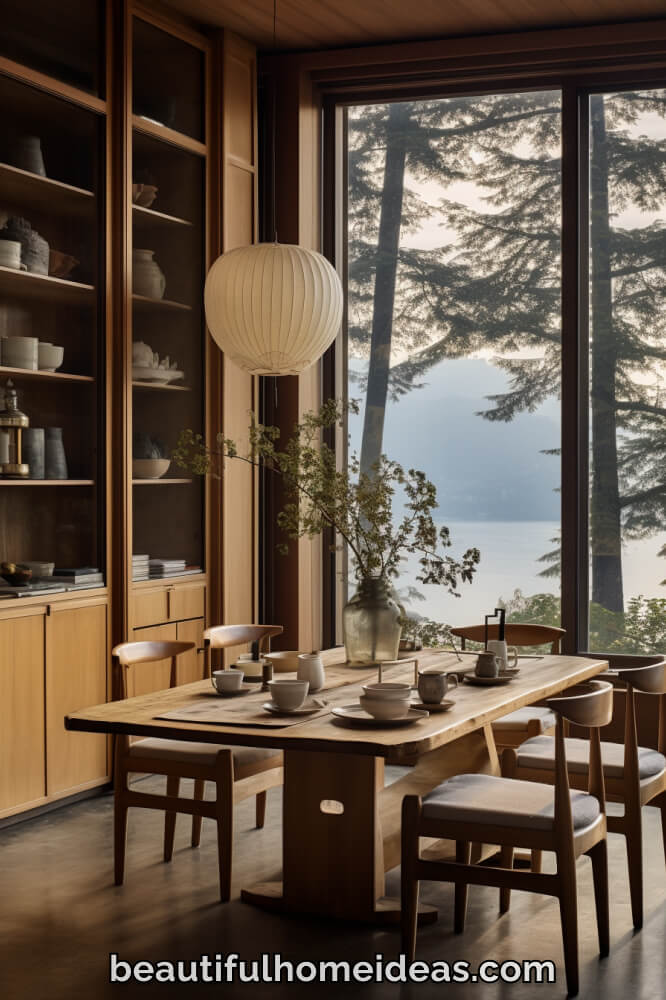
Bringing elements of nature into your dining room is another way to embrace wabi-sabi. This connection to nature fosters a sense of peace and harmony.

Indoor Plants: Add potted plants or a small indoor garden. Plants like ferns, succulents, and bonsai trees work well with the wabi-sabi aesthetic. They add a touch of greenery and freshness to your dining room.
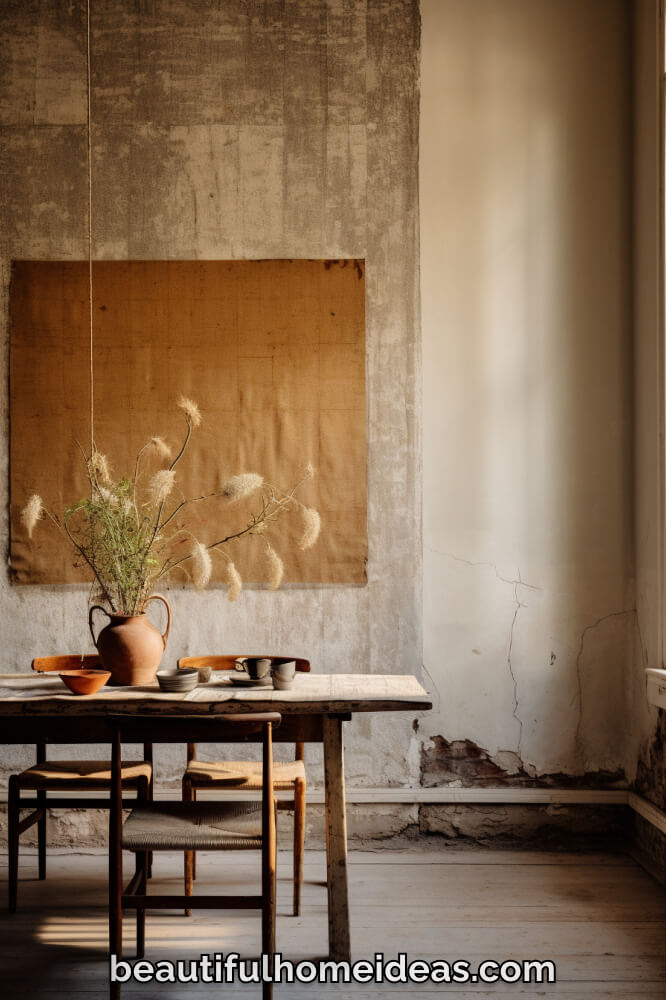
Natural Light: Maximize natural light by keeping windows bare or using sheer curtains. Natural light enhances the textures and colors of your decor, making the space feel airy and open.

Handcrafted Elements

Handcrafted items play a crucial role in wabi-sabi dining room ideas. These pieces reflect the skill and care of the maker, adding a personal touch to your space.

Artisan Furniture: Invest in handcrafted furniture. A custom-made dining table or handwoven chairs bring uniqueness and authenticity to your dining room.
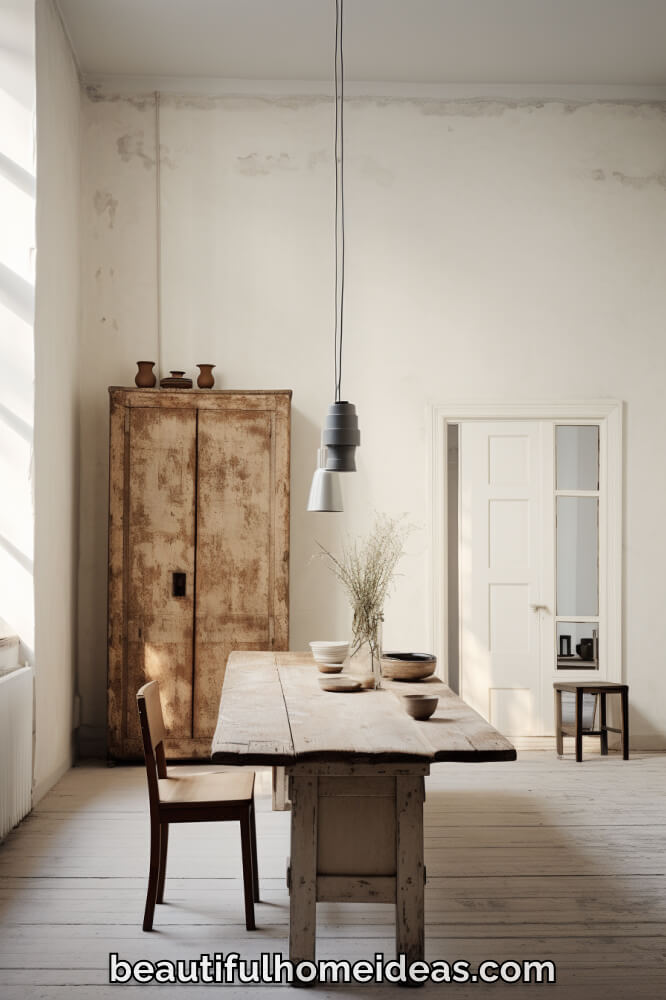
Ceramics and Textiles: Use handmade ceramics for your dishware and textiles for your table settings. These items, with their slight imperfections and unique qualities, add depth and character.

Creating a wabi-sabi dining room involves embracing simplicity, natural materials, and the beauty of imperfection. By incorporating these principles, you can design a space that feels serene, authentic, and deeply connected to nature.
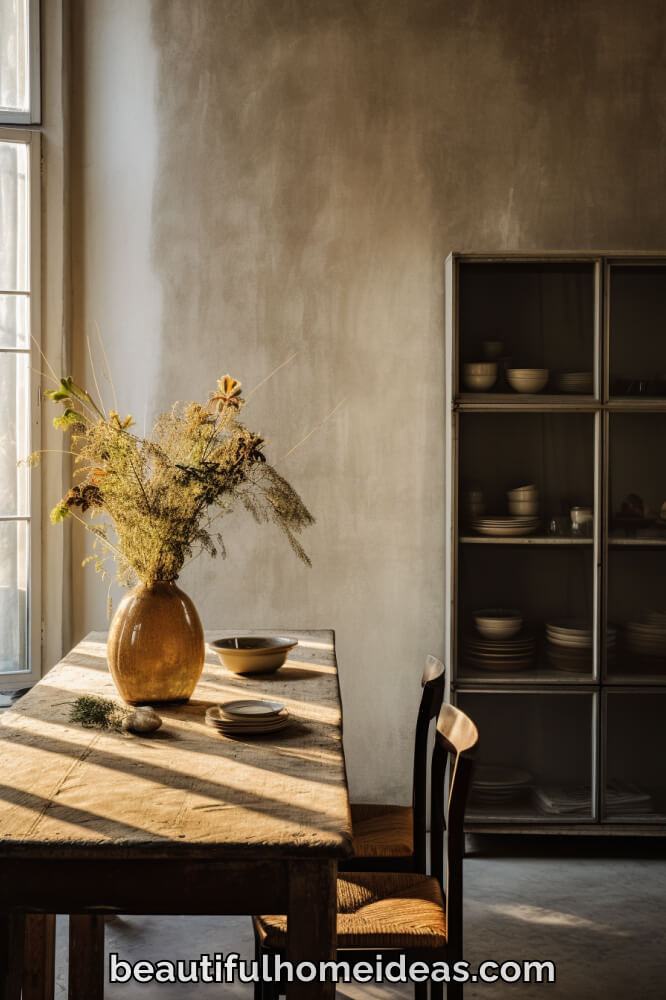
Whether it’s through the use of distressed furniture, muted colors, or handcrafted elements, wabi-sabi decor allows you to find beauty in the imperfect and the transient.


