
30 Best Japandi Kitchen Style Ideas That Will Inspire You

Welcome to the beautifully serene world of Japandi kitchens, where the fusion of Japanese and Scandinavian design creates a tranquil haven within your home.
This aesthetic is gaining popularity for its simplicity, balance, and seamless integration of functionality.

We’ll delve into the enchanting concept of Japandi kitchens, exploring why they’ve become a symbol of modern living and uncovering the key design features that make them so appealing.
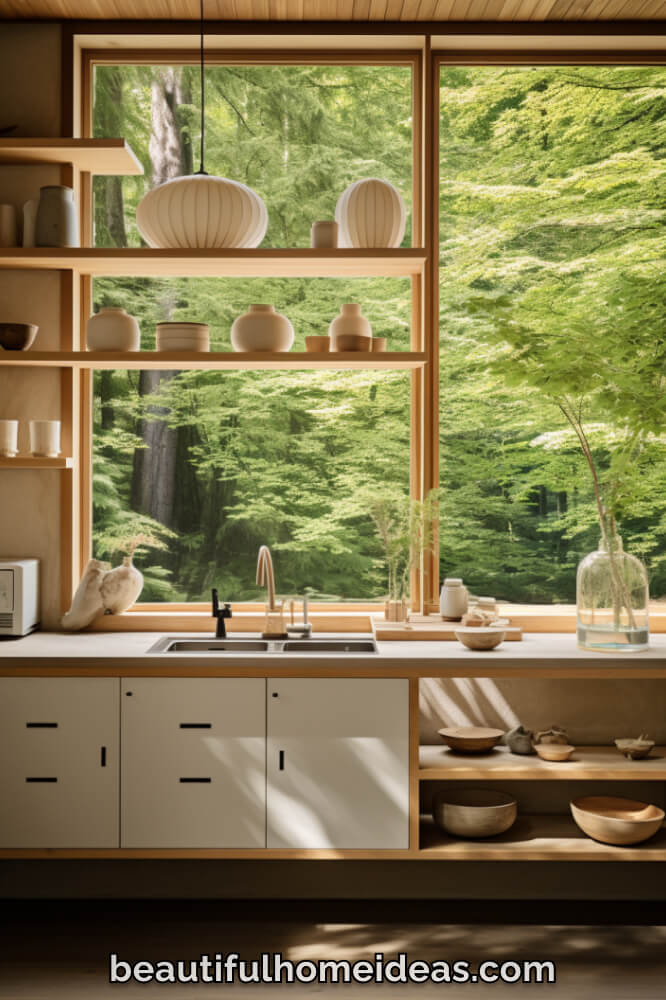
This post is also packed with Japandi kitchen design ideas which we hope will inspire you for any future kitchen remodelling projects.
What Is The Appeal Of Japandi Kitchen Design?

Japandi kitchens offer a harmonious blend of Japanese minimalism and Scandinavian functionality, making them a sought-after choice for modern living.

The appeal lies in their ability to create spaces that are not only visually stunning but also highly practical.
Here’s why people are falling in love with Japandi kitchens:
Simplicity and Calm
Japandi kitchens embrace simplicity, fostering a calm and clutter-free environment.
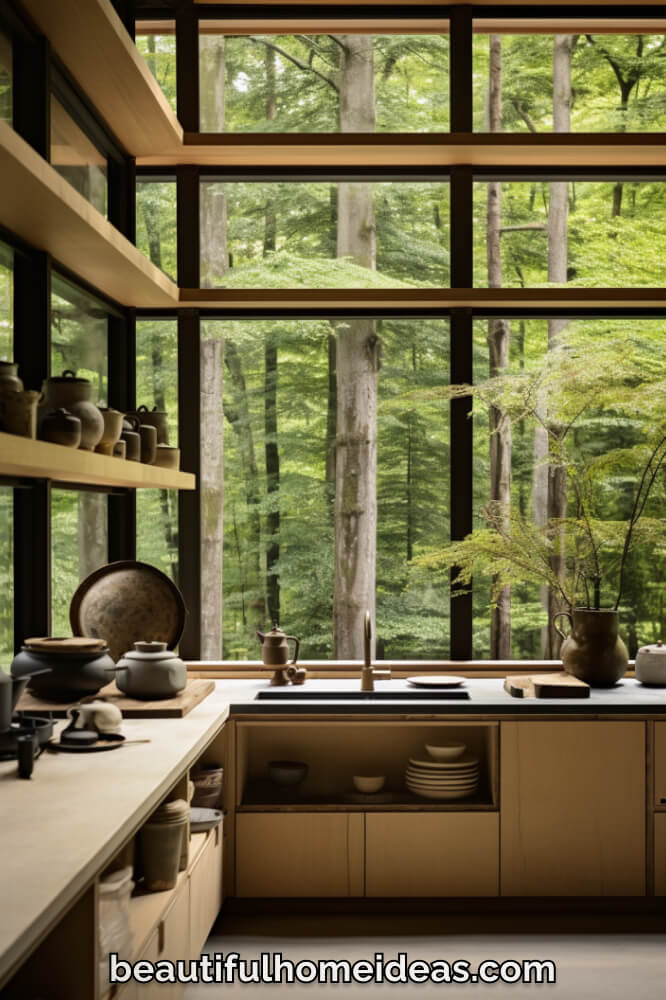
The absence of unnecessary adornments and a focus on clean lines create a soothing atmosphere, providing a break from the hustle and bustle of modern life.
Functionality Meets Aesthetics

These kitchens seamlessly integrate practicality with aesthetics.

Every element is purposeful, from clever storage solutions to purposeful furniture, ensuring that the kitchen not only looks good but also works efficiently for everyday tasks.

Natural Connection

The use of natural materials, such as wood and stone, establishes a connection with nature.

This not only adds warmth to the space but also brings an element of the outdoors inside, creating a harmonious and grounding ambiance.

Design Features of Japandi Kitchens

Now, let’s explore the key design features that define Japandi kitchens and contribute to their timeless appeal.

Neutral Color Palettes To Create a Serene Space
Japandi kitchens often feature a neutral color palette, including soft grays, whites, and light wood tones.

These colors create a serene canvas, providing a backdrop that is both calming and versatile.

The neutral hues allow for easy integration of natural materials, contributing to the overall tranquility of the space.

Clean Lines and Minimalism To Channel Simplicity

Clean lines and minimalistic design are at the core of Japandi aesthetics.

The absence of ornate details and the emphasis on simplicity create a visually uncluttered and elegant kitchen space.

This design choice not only enhances the aesthetic appeal but also promotes a sense of order and tranquility.
Natural Materials To Provide A Cozy Space And Infuse Texture

Japandi kitchens incorporate natural materials to add warmth and texture. From wooden cabinets to stone countertops, these elements create a tactile and inviting atmosphere.

The use of natural materials aligns with the Japanese and Scandinavian love for nature, fostering a connection to the environment within the confines of the kitchen.

Purposeful Furniture To Ensure Your Space Is Practical
Furniture in Japandi kitchens is selected with purpose. Low-profile, simple designs with natural finishes characterize the dining and seating areas.

Each piece serves a specific function while seamlessly blending into the overall aesthetic, contributing to the practicality and visual coherence of the kitchen.

Keeping It Minimal To Appreciate The Simplicity Around You
Japandi kitchens draw inspiration from Japanese minimalism, celebrating the beauty found in simplicity.

Clear countertops, uncluttered spaces, and thoughtful organization are key aspects.

This minimalist approach not only enhances the visual appeal but also fosters a mindful and calming atmosphere within the kitchen.

Scandinavian Influence For Extra Coziness
While one of its key features is simplicity, Japandi design doesn’t sacrifice coziness.

Influenced by Scandinavian design principles, and in particular the concept of “hygge,” Japandi kitchens incorporate soft fabrics, warm lighting, and cozy seating areas.

These elements contribute to a sense of comfort, making the kitchen a welcoming space for both family and friends.


